Why do you not love each other?
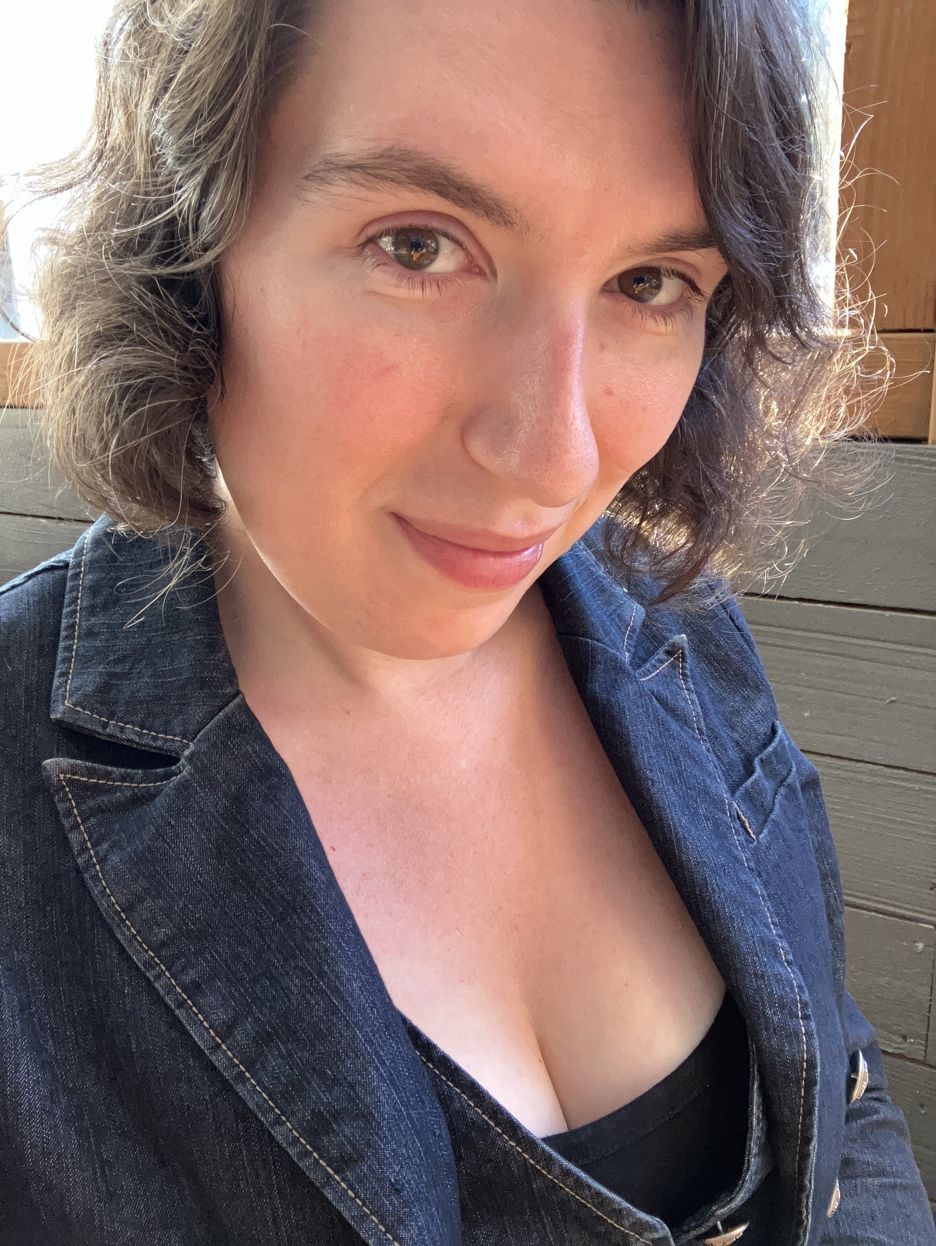
I recently began delivering a character performance at venues that make the mistake of giving me a stage for twenty minutes. The performance and the character are called TEETH. The performance consist of four monologues and four poems delivered by a "hyperdimensional outsider composed of a trillion lives". Sound familiar?
Of course, I'm not TEETH. I live a normal human life and just happen to have a comparatively unusual interiority, insofar as I've been able to determine that an interiority can be unusual at all. TEETH is a cathartic expression of how I sometimes feel seen: as dangerous, threatening, and impossible to understand. The character plays into these perceptions, and hams up the whole "hyperdimensional outsider" thing, in order to present a form of compassion that ostensibly sounds loving, but that is ultimately alien: both that you cannot comprehend TEETH's sense of love, and that it cannot understand when it is harming you. Then I deliver it with an uncomfortably toothy smile and a buttery bass, and the people seem to clap real loud about it. (A professional performer from Detroit told me after one show, "Honey, that was Broadway. That was pro." Well, they say it's easy to play yourself on TV.)
TEETH does ask one question that I do really have, which is:
Why do you not love each other?
To me -- the author, a person with a spiritual philosophy -- love is a form of cleverness that can realize a certain manner of covenant, a possibility-space for ways of life. Most animals on Earth live by the covenant of prey and predator, where you get good at eating others and not being eaten. This is essentially the way of all heterotrophs -- lifeforms that survive by eating other lifeforms. Trees and algae are autotrophs: they produce their sustenance from inert materials through processes like photosynthesis. Heterotrophs -- literally, "other-eaters" -- obtain sustenance through the food chain -- through predation -- which only begins with autotrophs, and expands from there into vast ecosystems of prey, predator, scavenger, and omnivore species. Though when we say "a predator species" we usually mean it actively hunts other living animals, a deer isn't not a predator just because it preys on plants.
Heterotrophs serve an important role in the cycle of decay. Without them, even simple autotrophs can over-exploit an atmosphere and cause repeated mass extinctions through mindless terraforming. On Earth, this has happened at least twice, and algae terraforming has ultimately become a force multiplier on every mass extinction in planetary history. When the heterotrophic food chain falls apart, even for a while, autotrophs change the world making up the difference. Only together can they create a resilient biosphere, which means, by dint of the heterotroph's defining diet, that murder is a necessary part of the cycle of life. It's a long way from saying it's alright for single-celled organisms to absorb and deconstruct each other, to arguing the right to sometimes kill things keeps a planet enduringly habitable, but that is essentially my position. I reconcile this with keeping compassion as a core value by positing this: that things can be killed respectfully.
Now, it's very unusual in the so-to-say West to kill animals respectfully. I could argue some hunters do, and some farmers do, but factory farming? Slaughterhouses? Foie gras? Colonizers, capitalists, and imperialists eat meat disgustingly, but I don't believe we can't do so respectfully instead.
Justifying that "taking, even life, is sometimes good" begs the question: when is it OK to take other things? Someone's stuff? Someone's dwelling, or sacred places? Someone's life, not for meat? Even my enemies ask the same questions, but come to different answers of profoundly different degrees. In some sense, a truly compassionate morality regarding these questions approaches a sacred mystery, which can only be sought or aspired toward, rather than spoken. I could say it is alright to take stuff from someone when it endangers many while in their hands; I could say it is alright to take a place when another must be driven from it, because they endanger many there; I could say it is alright to take a life when it endangers many. Taken in good faith and humility, applied contextually, I see no reason one cannot live up to the spirit of these boundaries. Does settlerism? Its boundaries are atrocities, no matter how it may argue using words like mine. Need I list examples? I posit only that one can thread the moral needle of these suppositions. I believe the systematization of cruelty is just not necessary, even if some forms of violence still are. Its existence shows me you do not love each other. If you did, this would be impossible -- or at least prevented by an eternal vigil, if one insists that the possibility of atrocity lives indelibly in the human spirit. I wouldn't argue that, but I can't seriously contest it. While I may argue that colonizers have shown an especial eagerness to systematize cruelty, no people anywhere is without a history that has some measure of it. It may be that, to realize through institutions the abolition of starvation, poverty, plague, and war, changing material conditions will not be able to preclude evil, but only, at best, to thwart it. And still I ask: why could you not thwart it? Are you not clever enough?
Love is a form of cleverness. The insight which that cleverness brings us is that you can both care what someone wants and also get what they have, either through trade, respect, or being patient with the cycle of decay. You can ask nicely, and a neighbor might oblige; you can exchange and both be richer, or ritualize gift cultures with the same effect; or you can inherit it when they pass -- for instance, either to inherit it by intent bestowal, or to cull an animal quickly and with least pain when the time has come for them to serve something bigger than your body. If it is only your body that your taking serves, then you have no excuse to take it besides that of the predator hungering. Now, that would be good enough for the covenant of prey and predator, but humans haven't been practicing that for millennia. In different ways, today the anthrosphere maintains a covenant of profit and privation. Something far stranger than the food chain guides human evolution now, which even the species may not live to understand. So, why? Why this instead?
Why don't we recognize that we realize a lifeform as big as all of us, and that we can choose its actions, not as any of us but only as all of us? Why do we practice profit and privation instead while pretending to be helpless about it? Communists know you can do better. So do I. Or at least, I suppose, I'd like to think so.
When we fail that cleverness, or ignore it or deny it or sabotage it or whatever, I wonder: why? The only reasons I can think of, for why you would choose cruelty, are that either you're not clever enough for a covenant besides prey and predator, or you're evil. Of course, to call a person evil is little more than to say your gods curse theirs. They believe something body-denying, for which they might devote and even sacrifice their physical existence -- like I might for what I believe -- but it is not love. They rather worship some insensate ignorance or disregard of our nature not merely as peers but as facets of the only being that exists. When you hurt others, you hurt yourself. When you do I must ask: why would I hurt myself? And I have no answer that is not to observe the gods recognized by these actions, and to struggle to demolish their temples and end their worship -- but calling rationales-with-inertia "gods" makes secularists squirm. Why would they sacrifice us as they do, blood down the ziggurat's angles with so many steps, the color of rent and vaccines and rice and beans and meat -- why would they go to such lengths for anything less than faith? What but a god could call so loud? Well, blessed be, for even deities can die.
We are just using different words for the universe we share, because we see it differently, and we share an imperfect tongue. It is the same elephant, you my fellow among we sightless. Capitalism and colonialism can be destroyed, and it will be like storming heaven and smashing the thrones there. Maybe then you will realize that you built those thrones. Then we will build new thrones where we will place the love that hears us back, and it will shine like a sixth sun, as full of life as a verdant Spring.
Unless, you don't change the superstructure, and fail to realize a compassionate planetary order. In the great span of Possibility, you often don't. Perhaps you never for long maintain a vigil against such madness as threatens the whole cycle of decay. Perhaps it destroys your whole niche in the mass extinction you already summon. But, perhaps you do change it. It isn't for me to determine. It remains, so to say, a choice. So I ask again, why do you not love each other? It seems, because you choose not to. Not enough, and not militantly enough.
You may personally protest, may say, "But I do," but I'm not talking about individuals. The body of the superstructure is all of us, and when we take responsibility for it, we do become our brother's keeper. If you cannot mount that mutual concern, then you should never have escaped predation, and in time, at best, you will be forced to return to it. If a path exists for your niche beyond the conclusion of that failure, it may rob you of your fingers and toes, but most assuredly of your neural mass. Evolution-selection will recoil, yanking fingers from the stove, and remark in pain: "Civilization undermines survival." If a future exists for you in the extinction that you refuse to avert, it will not allow you a covenant more sophisticated than any other beast today -- if you are lucky enough to become seals and troglodytes, rather than to simply vanish into plastic fossils.
So I repeat: why do you not love each other? If you want to live, if you want your descendants to span the stars in wisdom and health, then you'll have to learn to. You'll have to love each other enough to stop each other as much as to care for each other. The only alternatives are crueler than compassion.
So, will you love each other? Defy my doubt.
This can be asked of any people, anywhere and at any time, and the challenge of compassion can be taken up at any scale, every fraction of the struggle to love one's own self, and all the lives and experiences it spans. It can be asked of those in Israel, Saudi Arabia, Russia, China, and of course: the so-called America, where I happen to reside. I think I'm going to outlive it.
To fail a higher covenant than profit and privation will ultimately lead to extinction, but along the way it emits all sorts of poisons. We experience them as poverty, artificial famine, artificial scarcity, and the organized dismantlement of the institutions of the social fabric -- particularly at this present moment, access to food, shelter, and medical care. What do you mean there's no work? There's so much work to do. So why aren't we doing it? I go to work and I'm asked if my heart is in it. We are the fat vampire leeches in an ocean of blood, and the blood is ours, and the blood is debt, and the ocean is everyone's blood all sloshing together in this wretched era of capital and colony. The ocean freezes in the veins of the unsheltered corpse you ignore. Maybe the ocean is freezing all around us. Does your body remember the cold, the eras of gradients of Winter? Your spirit will live to remember this instant of it. We do not need to challenge the species to arrive at some enlightened consensus. You love yourself, and then who you can, and you build from there trust like a muscle. We must challenge ourselves and our neighbors to love each other more than the capitalist does, for its love is sanguine and hungry, and its road ends.
Zohran Mamdani will be the mayor of New York. He calls himself a democratic socialist, and speaks like a fingerhole of light pouring through the Red Scare's nightmarish veil. He has the juice like few have seen in this life. But, anyone thinking wonders: don't we know what happens to leaders, and somehow especially ours? Pedestals rock and shake and tumble. You don't need to worship at its base. You need columns to hold up the roof, so get him down from there. I don't live in New York City and, in all likelihood, neither do you. You know what time it is, I hope. The ground is moving; keep your footing, keep your heading. Mamdani's juice will never be the rain; only we all can do that. You start where you are, and the only cavalry coming is each other. (Mamdani's campaign did produce documentation of its methods and practices, so maybe study up. We can recognize that elections aren't the whole of the struggle, and still attack the broad front's caving lines with all our collective wisdom.)
Will humans overcome cruelty's call of extinction? I don't know; it seems too big to wonder in a way that matters. But, will you and I find another way of life than capital and colony? I don't know, but, I know we want it, and I can see we'll even work toward it. The people of what we call China overcame a century of humiliation. Even if it takes a century, can we not overcome ours? I insist we can, and I am not alone.
Elijah banished Baal with chemistry; what cleverness had he then that not one of us possesses now? None. When capital wails for its trade routes, and we feed one other another way, will you say we were given it by a Creator's favor? The heavens are not aligned to your perception: the possibility of the way is in us already. It is the possibility of love, and nothing can remove that from anyone.
Do not allow fear to goad you into a life of regret. Do not permit greed to rob you of better things. Do not forget that we can love each other. The struggle to do so won't end in your lifetime but you can choose your part in its demise -- or ours.